Goulburn Broken CMA project officer, Janice Mentiplay-Smith, said the Peregrine Falcon was recorded reaching speeds around 180km per hour and was skilled at making ‘blink and you miss it’ surgical strikes on their unsuspecting prey, usually other birds.
Peregrine Falcons are not nest builders; instead, they take advantage of the labours of other birds and re-purpose abandoned nests in which to lay their eggs or use recesses of cliff ledges or tree hollows.
“They are quick to adapt to a changing environment and have learned that window ledges on high-rise city buildings are a great substitute for a tall cliff,” Ms Mentiplay-Smith said.
“Once they bond to a nesting site, they will return year after year, as with the famous Collins Street pair in Melbourne. Visit 367 Collins Falcons - YouTube to see in real-time how Peregrine Falcons live when they are unaware anyone’s watching.
“They are fascinating to watch and are taking wonderful care of their three chicks. It’s always fun to see the parents swap ‘chick care’ duties; the way the adults do their ‘Mission Impossible’ high-speed dive off the ledge is great to watch.”
Peregrine Falcons are fiercely territorial and will defend their patch against any interlopers, including their own teenaged chicks who are driven away by their parents after a few months to find their own home – whether it be a cliff top or high-rise building. They generally maintain a home range of about 20 to 30 square kilometres.
The Goulburn Broken catchment is home to the Peregrine Falcon, however at one point in time, their tenure was precarious.
Agricultural pesticides that reduced eggshell thickness were commonly used in the 1960s to the 1980s. This almost resulted in Peregrine Falcon extinction, as thin eggshells meant fewer chicks were able to fully develop and hatch. Thankfully by the late 1980s these chemicals were banned and Peregrine Falcon populations rebounded.
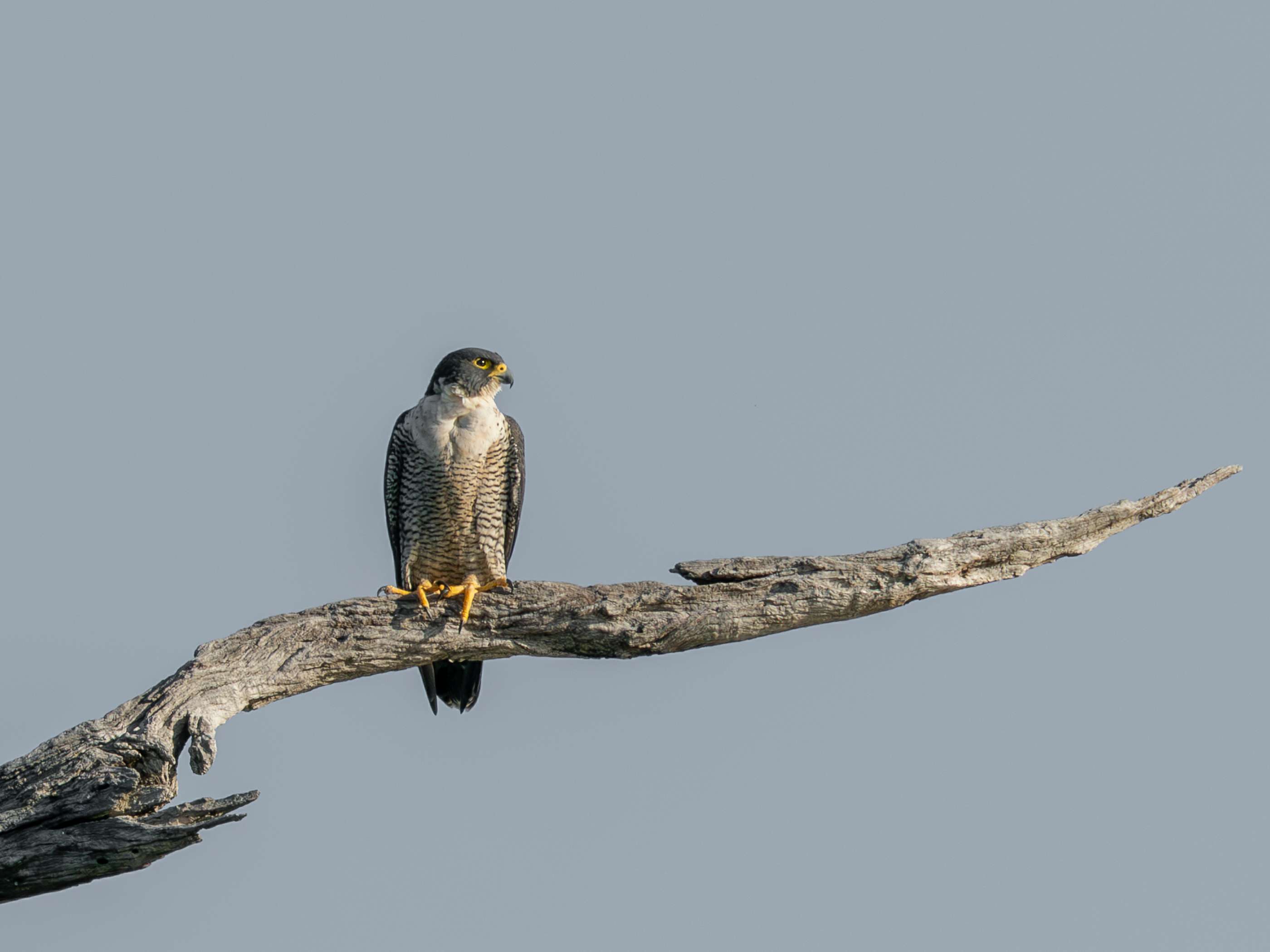 Peregrine Falcon by Jenny Younger
“The Peregrine Falcon lives throughout Australia but is not considered overly common anywhere, which is why it’s a treat to spot one,” Ms Mentiplay-Smith said.
“It is also found in Europe, Asia, Africa and the Americas, however chemical use has impacted on populations in some areas where they may be locally extinct.”
Bird watching is an enjoyable way to see the Goulburn Broken catchment's beautiful birdlife, including its amazing raptors. Local birding group Murray Goulburn BirdLife meet monthly to conduct outings and enjoy the local environment. A bird survey will be held on Saturday 21 November at Mt Samaria. For more information, contact: robertsdon680@gmail.com
Learning more about a species and its requirements is a positive first step in helping it and the environment it relies on. BirdLife Australia’s Raptor Group promotes the conservation, management and study of Australia's birds of prey and fosters communication and cooperation among raptor enthusiasts across Australasia. For more information visit https://ausraptorgroup.org
The Year of the Raptor is supported by the Victorian Government through the Catchment Stewardship Program.