Biodiversity assets in the Goulburn Broken
The Goulburn Broken Catchment has a significant component of Austalia's biodiversity, much of which is under threat. The main pressures on Australia’s biodiversity – habitat fragmentation, altered fire regimes, invasive species (both non-native and native), harvesting of species, and climate change – are increasing, and the rate of species decline is not slowing down.
Biogeographic regions or Bioregions are the basis for planning and managing biodiversity assets in Victoria.
This section lists some of the major biodiversity assets found in the Goulburn Broken Catchment. The following categories are one way to categorise biodiversity assets in the Goulburn Broken.
In the Goulburn Broken Catchment a vast majority of the native vegetation has been historically cleared for agricultural development and timber supply.
There are 493 species of native vertebrate fauna in the Goulburn Broken Catchment which includes mammals, birds, reptiles, fish and amphibians(35 introduced species).
Very little is known about the important function that soil biodiversity plays in maintaining healthy ecosystems.
Bioregions
Biogeographic regions (or Bioregions) depict the patterns of ecological characteristics in the landscape and can be used as a framework to address landscape management and biodiversity issues. Bioregions are the basis from which the conservation status of Ecological Vegetation Classes (EVCs) and priorities for managing threatened species are determined.
The Goulburn Broken Catchment Management Authority boundary crosses eight bioregions listed as follows:
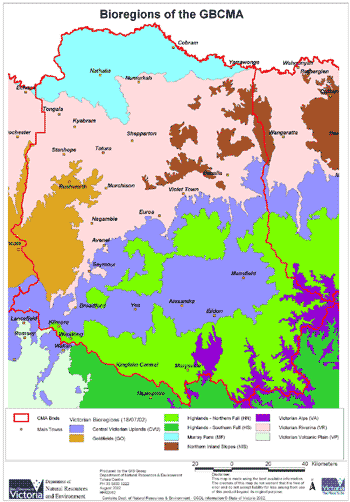
Click for an enlargement